Speakers
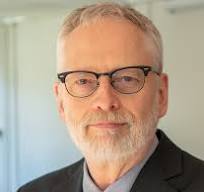
Daniel Hiebert is an Emeritus Professor of Geography at the University of British Columbia. He conducts research on migration/immigration policy and the impact of immigration on Canadian cities. This includes an effort to understand Canadian immigration within the wider global context.
He also plays an active role in the Canadian policy process. This has included extensive engagement with municipal, provincial and federal authorities. In 2021-2024, he was appointed Academic in Residence at Immigration, Refugees and Citizenship Canada.
He is also closely associated with the Bridging Divides project at Toronto Metropolitan University, the Max Planck Institute for the Study of Religious and Ethnic Diversity, and the Transatlantic Council on Migration.
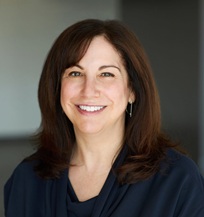
Yasmeen Abu-Laban is Professor of Political Science and Canada Research Chair in the Politics of Citizenship and Human Rights at the University of Alberta, and a Fellow at the Canadian Institute for Advanced Research.
She has served as President of both the Canadian Political Science Association and the Canadian Ethnic Studies Association, as well as Vice-President of the International Political Science Association.
The author or co-author of ten books and over 150 peer-reviewed articles and chapters, her published research addresses themes relating to multiculturalism and anti-racism; migration policies and politics; surveillance, artificial intelligence and border control; and human rights.
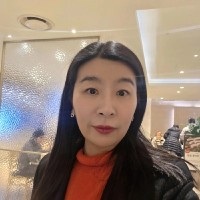
Jihye Son is a sociologist whose research focuses on migration, diaspora, social integration, and co-ethnic return migration. Her work examines the experiences of Koryo-saram, international students, and other migrant populations in South Korea, with particular attention to identity, belonging, citizenship, and boundary-making.
She has also engaged in research and policy-related projects on multiculturalism, foreign residents, and diaspora communities. Drawing on both academic and field-based experience, her research connects sociological theory with contemporary issues of migration and diversity in Korea and beyond. She is currently affiliated with the Institute of Asiatic Studies at Korea University.
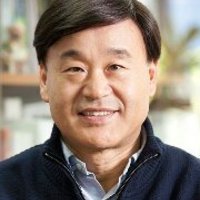
In-Jin Yoon is professor of the Department of Sociology, Korea University and the former presidents of the Association for North Korean Migrants Studies and the Association for the Studies of Koreans Abroad. He received his Ph. D. from the University of Chicago and taught at the Asian American Studies Department of the University of California, Santa Barbara.
His major publications include On My Own: Korean Businesses and Race Relations in America, Korean Diaspora: Migration,
Adaptation, and Identity of Overseas Koreans, and North Korean Migrants: Lives, Consciousness, and Support Policy for Resettlement, South Koreans’ Perceptions of Migrant Workers and Multicultural Society, and Migration and Transnational Space in Northeast Asia, Mutual Perceptions of North Korean Migrants and South Koreans, Trends and Tasks of Studies of Koreans Abroad, and the History of Koreas Abroad, History of Overseas Koreans, International Migration and Multiculturalism in Northeast Asia, Reflections on Multiculturalism in Korea and Its Prospects.
His research interests include social psychology, minorities, international migration, and multiculturalism.
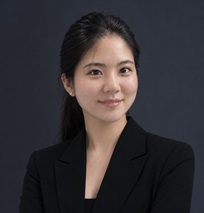
Youjeong Jang is an early-career researcher with a Ph.D. in Geography from the University of Waikato in New Zealand. Her thesis investigates the mobility of the European urban diversity policy known as the Intercultural Cities Programme to Asia, with a focus on Ansan, an industrial city on the outskirts of Seoul.
She is now developing her thesis into a monograph (Routledge, forthcoming). Youjeong has nine years of work experience as a project manager, researcher, and research assistant in the field of international migration, both in South Korea and New Zealand.
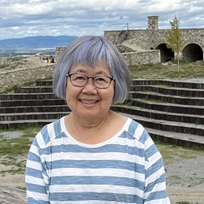
Lucia Lo is Professor Emerita and Senior Scholar of Geography at York University. Trained as a spatial scientist at McMaster University and the University of Toronto, she has brought innovative approaches to examining the role of immigrants in economic development and urban transformation.
Her (im)migration scholarship covers the geographies of immigrant consumption, entrepreneurship and ethnic business structures, immigrant labour market performance, immigrant financial integration, and the geographies of social infrastructure and vulnerability. Her latest is a tri-national project on intellectual migration.
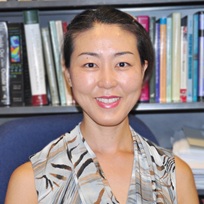
Min-Jung Kwak is an economic and social geographer whose work bridges academic research with community engagement. Her scholarship spans immigration and settlement studies, with projects examining the international education industry, immigrant entrepreneurship, transnational healthcare, and the mobility of knowledge and talent (i.e., intellectual migration).
Over the years, Dr. Kwak has collaborated closely with diverse immigrant communities in Canada’s major cities, forging enduring research partnerships with Chinese-Canadian and Korean-Canadian organizations. In addition to her academic work, she contributes to the broader scholarly community as vice-president of the Canadian Ethnic Studies Association.
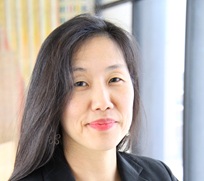
Ann H. Kim is an Associate Professor of Sociology at York University and the current Director of York’s Korean Office for Research and Education.
Her co-edited books include: Korean Immigrants in Canada: Perspectives on Migration, Integration, and the Family (UTP 2012), Outward and Upward Mobilities: International Students, Their Families and Structuring Institutions (UTP 2019), and International Students from Asia in Canadian Universities: Institutional Challenges at the Intersection of Internationalization, Racialization, and Inclusion (Routledge 2024).
She also belongs to the RAIS Collective and is the author of Not Your Cash Cow, Not Your Scapegoat: Student Migration and Canadian Universities (Fernwood 2026).
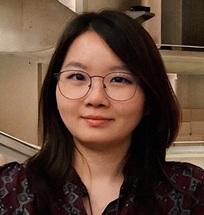
Seulsam Lee is a PhD student in Sociology at York University in Toronto, Canada. Her research focuses on social inequalities, labour, gender, race, migration, citizenship, and Asian/Korean diasporas.
Her work examines the complex relationships between transnational phenomena, national institutions and regulatory frameworks (such as immigration policies), and the cultural practices through which migrants navigate everyday life.
She is particularly interested in how migrants from diverse backgrounds experience and negotiate temporary migration under global capitalism and temporary migration regimes, and how their lived experiences challenge conventional understandings of mobility and migration, freedom and precarity, and work and leisure.
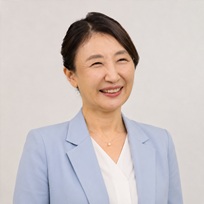
Romee Lee is an Assistant Teaching Professor in the Department of Education at Korea National Open University. She earned her Ph.D. in Adult Education from the University of British Columbia, Canada.
Over the past 17 years, she has conducted extensive research and taught courses in both Korea and Canada, specializing in educational program planning for diverse adult populations. Her research explores the unique characteristics of adult learning experiences and examines how intersecting identities influence learning across formal, non-formal, and informal educational settings.